Wednesday, March 28, 2012

Obedience Training for Dogs


Many people can't imagine life without dogs. We admire and adore them for their loyalty, unconditional affection, playful exuberance and zest for life. Nevertheless, dogs and people are very different animals. Although officially “man's best friend,” dogs have some innocent but irksome tendencies-like jumping up to greet, barking, digging and chewing-that can make it downright difficult to live with them! To make the most of your relationship with your dog, you need to teach her some important skills that will help her live harmoniously in a human household.
Learning how to train your dog will improve your life and hers, enhance the bond between you, and ensure her safety-and it can be a lot of fun. Dogs are usually eager to learn, and the key to success is good communication. Your dog needs to understand how you'd like her to behave and why it's in her best interest to comply with your wishes.

How Should You Do It?

If you ask around, you'll get all kinds of advice about training your dog. Some people will tell you that the key is to use a “firm hand”-to make sure your dog doesn't think she can get away with naughty behavior. Some people argue that you should only use rewards in dog training and avoid punishing your dog in any way. Some people insist that all you have to do is “be the alpha dog,” assert your status as the dominant leader of your “pack.” It's easy to get overwhelmed by the glut of differing opinions out there.
Regardless of which method and techniques you use, effective dog training boils down to one thing-controlling the consequences of your dog's behavior. If you want to influence the way your dog behaves, you need to:
  1. Reward behaviors you like.
  2. Make sure behaviors you don't like aren't rewarded.
Understand How Your Dog Learns
One of the most frequent complaints of pet parents is that their dogs “just won't listen.” But put yourself in your dog's shoes for a moment. If someone was constantly chattering away in a foreign language that you'd never heard before, how long would you pay attention? Probably not for very long-because you simply wouldn't be able to understand what the foreign speaker was trying to communicate.
To communicate clearly and consistently with your dog, you need to understand how she learns. Dogs learn through the immediate consequences of their behavior. The nature of those consequences determines how they'll behave in the future. Dogs, like other animals (people included), work to get good things and avoid bad things in life. If a behavior results in something rewarding-like food, a good belly rub, playtime with dog buddies or a game of fetch with her pet parent-your dog will do that behavior more often. On the other hand, if a behavior results in an unpleasant consequence-like being ignored or losing things she finds rewarding-she'll do that behavior less often.
If You Like the Behavior, Reward It
Some training methods use punishment, like leash corrections and scolding, to discourage dogs from doing everything except what you want them to do. Other methods cut right to the chase and focus on teaching dogs what you do want them to do. While both tactics can work, the latter is usually the more effective approach, and it's also much more enjoyable for you and your dog. For example, you can easily use treats, games and praise to teach your dog to sit when people approach during walks in the neighborhood. If your dog is sitting, she won't be dragging you toward the people, jumping up when they get close enough, mouthing on their arms and legs, and so on. That's pretty efficient training-no pain or intimidation needed. Alternatively, you could grab your dog's leash and jerk her to the ground every time she jumps up to greet people, and you'd most likely get the same effect in the end-no more jumping up. But consider the possible fallout:
  • Your dog might decide that people are scary since she gets hurt whenever she tries to greet them-and she might try to drive them away by growling or barking the next time they approach.
  • Your dog might decide that YOU are scary since you hurt her whenever she tries to greet people.
If you can teach your dog polite manners without hurting or frightening her, why not do it? Rather than punishing her for all the things you don't want her to do, concentrate on teaching your dog what you do want her to do. When your dog does something you like, convince her to do it again by rewarding her with something she loves. You'll get the job done without damaging the relationship between you and your best friend.
If You Don't Like the Behavior, Take Rewards Away
The most important part of training your dog is teaching her that it pays to do things you like. But your dog also needs to learn that it doesn't pay to do things you don't like. Fortunately, discouraging unwanted behavior doesn't have to involve pain or intimidation. You just need to make sure that behavior you dislike doesn't get rewarded. Most of the time, dog motivations aren't mysterious. They simply do what works! Dogs jump up on people, for example, because people pay attention to them as a result. They can learn not to jump up if we ignore them when they jump up instead. It can be as simple as turning away or staring at the sky when your dog jumps up to greet or play with you. As soon as she sits, you can give her the attention she craves. If you stick to this plan, your dog will learn two things at once. Doing something you like (sitting) reliably works to earn what she wants (attention), and doing things you don't like (jumping up) always results in the loss of what she wants.
Control Consequences Effectively
As you teach your dog what you do and don't want her to do, keep the following guidelines in mind:
  • Consequences must be immediate Dogs live in the present. Unlike us, they can't make connections between events and experiences that are separated in time. For your dog to connect something she does with the consequences of that behavior, the consequences must be immediate. If you want to discourage your dog from doing something, you have to catch her with her paw in the proverbial cookie jar. For example, if your dog gets too rough during play and mouths your arm, try saying “OUCH!” right at the moment you feel her teeth touch your skin. Then abruptly end playtime. The message is immediate and clear: Mouthing on people results in no more fun. Rewards for good behavior must come right after that behavior has happened, too. Say a child in a classroom answers a teacher's question correctly, gets up from his desk, sharpens his pencil and then punches another kid in the arm on the way back to his seat. Then the teacher says, “Good job, Billy!” and offers him a piece of candy. What did Billy get the candy for? Timing is crucial. So be prepared to reward your dog with treats, praise, petting and play the instant she does something you like.
  • Consequences must be consistent When training your dog, you-and everyone else who interacts with her-should respond the same way to things she does every time she does them. For example, if you sometimes pet your dog when she jumps up to greet you but sometimes yell at her instead, she's bound to get confused. How can she know when it's okay to jump up and when it's not?
Be a Good Leader
Some people believe that the only way to transform a disobedient dog into a well-behaved one is to dominate her and show her who's boss. However, the “alpha dog” concept in dog training is based more on myth than on animal science. More importantly, it leads misguided pet parents to use training techniques that aren't safe, like the “alpha roll.” Dogs who are forcibly rolled onto their backs and held down can become frightened and confused, and they're sometimes driven to bite in self defense.
Keep in mind that ditching the “alpha dog” concept doesn't mean you have to let your dog do anything she likes. It's fine to be the boss and make the rules-but you can do that without unnecessary conflict. Be a benevolent boss, not a bully. Good leadership isn't about dominance and power struggles. It's about controlling your dog's behavior by controlling her access to things she wants. YOU have the opposable thumbs that open cans of dog food, turn doorknobs and throw tennis balls! Use them to your best advantage. If your dog wants to go out, ask her to sit before you open the door. When she wants dinner, ask her to lie down to earn it. Does she want to go for a walk? If she's jumping up on you with excitement, wait calmly until she sits. Then clip on the leash and take your walk. Your dog will happily work for everything she loves in life. She can learn to do what you want in order to earn what she wants.

Training New Skills

It's easy to reward good behavior if you focus on teaching your dog to do specific things you like. Dogs can learn an impressive array of obedience skills and entertaining tricks. Deciding what you'd like your dog to learn will depend on your interests and lifestyle. If you want your dog to behave politely, you can focus on skills like sit, down, wait at doors, leave it, come when called and stay. If you want to enhance your enjoyment of outings with your dog, you can train her to walk politely on leash, without pulling. If you have a high-energy dog and would like outlets for her exuberance, you can teach her how to play fetch, play tug-of-war or participate in dog sports, such as agility, rally obedience, freestyle and flyball. If you'd like to impress your friends or just spend some quality time with your dog, you can take her to clicker training or trick-training classes. The possibilities are endless! Please see the following articles to find out more about what you and your dog can learn to do together: Clicker Training Your Pet, Teaching Your Dog Not to Jump Up on People, Teaching Your Dog to Come When Called, Teaching Your Dog Not to Pull on Leash, Teaching Your Dog to Play Tug-of-War, and Teaching Your Dog to Play Fetch.
Training Tips
After you decide on some new skills you'd like to teach your dog, you'll be ready to start training. To maximize her learning potential and make sure you both enjoy the training experience, keep the following basic tips in mind:
  • When teaching new skills, keep training sessions short and sweet Like kids, dogs don't have long attention spans. There's no hard-and-fast rule, but an ideal average training session should last 15 minutes or less. Within that session, you can work on one skill or switch between a few different skills. To keep things interesting, try doing 5 to 15 repetitions of one behavior and then doing 5 to 15 repetitions of another behavior. You can also practice new skills and keep old ones polished by doing single repetitions at convenient times throughout the day. For example, before giving your dog a tasty new chew bone, ask her to sit or lie down to earn it.
  • Quit while you're ahead End training sessions on a good note, with a skill you know your dog can do well, and be sure to stop before either one of you gets tired, bored or frustrated.
  • For dogs, English is a second language Dogs aren't born understanding English. They can learn the significance of specific words, like “sit” and “walk” and “treat,” but when humans bury those familiar words in complex sentences, dogs sometimes have difficulty understanding. They can also get confused when people use different words for the same thing. For example, some people will confuse their dogs by saying, “Fluffy, down!” one day and “Sit down, Fluffy!” another day. Then they wonder why Fluffy doesn't respond the same way every time. When teaching your dog a cue or command, decide on just one word or phrase, and make sure you and your family use it clearly and consistently.
  • Take baby steps Dogs, just like people, learn best when new tasks are broken down into small steps. For example, you can't go out and line dance unless you learn all of the individual steps first! When teaching your dog a new skill, begin with an easy first step and increase difficulty gradually. If you're training your dog to stay, start by asking her to stay for just 3 seconds. After some practice, try increasing the duration of her stay to 8 seconds. When your dog has mastered an 8-second stay, make things a little harder by increasing the time to 15 seconds. Over the next week or two, continue to gradually increase the duration of the stay from 15 seconds to 30 seconds to a minute to a few minutes, etc. By training systematically and increasing difficulty slowly, you'll help your dog learn faster in the long run.
  • Work on only one part of a skill at a time Many of the skills we want our dogs to learn are complex. For instance, if you want to train a solid sit-stay, you'll need to work on teaching your dog that she should stay in a sitting position until you release her (duration), she should stay while you move away from her (distance), and she should stay while distracting things are going on around her (distraction). You'll probably both get frustrated if you try to teach her all of these things at the same time. Instead, start with just one part of the skill and, when your dog has mastered that, add another part. For example, you can work on duration first. When your dog can sit-stay for a few minutes in a quiet place with no distractions while you stand right next to her, start training her to stay while you move away from her. While you focus on that new part of the skill, go back to asking your dog to stay for just a few seconds again. When your dog can stay while you move around the room, slowly build up the duration of the stay again. Then you can add the next part-training in a more distracting environment. Again, when you make the skill harder by adding distraction, make the other parts-duration and distance-easier for a little while. If you work on all the parts of a complex skill separately before putting them together, you'll set your dog up to succeed.
  • If you run into trouble, go back a few steps If you're training your dog to do something new and you stop making progress, you may have increased the difficulty of the skill too quickly. Similarly, if you're practicing a behavior your dog hasn't performed in a while and she seems a little rusty, she may need some help remembering what you want her to do. If you run into training challenges like these, just refresh your dog's memory by making the skill a little easier for a few repetitions. Go back to a step that you know your dog can successfully perform, and practice that for a while before trying to increase difficulty again.
  • Practice everywhere, with everyone If you learn that two plus two equals four in a classroom, you'll take that information with you wherever you go. Dogs, however, learn very specifically and don't automatically apply their knowledge in different situations and places as well as people do. If you teach your dog to sit on cue in your kitchen, you'll have a beautifully kitchen-trained dog. But she might not understand what you mean when you ask her to sit in other locations. If you want your dog to perform new skills everywhere, you'll need to practice them in multiple places-your home, your yard, out on walks, at friends' houses, at the park and anywhere else you take your dog.
  • Use real rewards Be sure to reward your dog with things she truly finds rewarding. Some dogs will happily work for dry kibble when training in your living room but ignore it if you're training in the park. Because the park's a more distracting environment, paying attention there is a harder job for your dog. Pay her accordingly by using a reward worth working for, like small pieces of chicken or cheese, or a chance to run off-leash at the dog park with her buddies. Also keep in mind that what your dog considers rewarding at any given time may change. If she's just eaten a big meal, a scratch behind the ears or a game of tug might be most rewarding. If she hasn't eaten in a while, she'll probably work enthusiastically for tasty treats.
  • Be patient Training your dog will take time and effort-but it can be a great deal of fun for you and for her. And your hard work will pay off. With patience and persistence, you and your dog can accomplish great things.

An Ounce of Prevention

If your toddler was repeatedly sticking her fingers into open electrical outlets, what would you do? Would you sit her down and try to explain why that's not a good idea? Would you smack her every time she did it? Nope, you'd probably buy some outlet covers. Voil�! Problem solved. Prevention is sometimes the best solution. When training a dog, the easiest way to deal with a behavior problem might be to simply prevent the undesired behavior from happening. If your dog raids the kitchen trash can, you could spend weeks training a perfect down-stay in another room-or you could move the trash can to a place where your dog can't get to it. Prevention is also important if you're trying to train your dog to do one thing instead of another. For example, if you want to house train your dog, she'll learn fastest if you use a crate to prevent her from making mistakes inside while you focus on training her to eliminate outside.
 Let Your Dog Be a Dog
Many behavior problems can be prevented by providing “legal,” acceptable ways for your dog to express her natural impulses. There are some things that dogs just need to do. So rather than trying to get your dog to stop doing things like chewing, mouthing and roughhousing altogether, channel these urges in the right direction. Increased physical activity and mental enrichment are excellent complements to training

Wednesday, March 21, 2012

Animal Psychologists Discover What Music Pets Prefer

Many pet owners leave their home radios playing all day for the listening pleasure of their dogs and cats. Station choices vary. "We have a very human tendency to project onto our pets and assume that they will like what we like," said Charles Snowdon, an authority on the musical preferences of animals. "People assume that if they like Mozart, their dog will like Mozart. If they like rock music, they say their dog prefers rock."
Against the conventional wisdom that music is a uniquely human phenomenon, ongoing research shows that animals actually do have the capacity for music. But rather than liking classical or rock, Snowdon, an animal psychologist at the University of Wisconsin-Madison, has discovered that animals march to the beat of a different drum altogether. They enjoy what he calls "species-specific music": tunes specially designed using the pitches, tones and tempos that are familiar to their particular species.
With no pun intended, music is all about scale: Humans like music that falls within our acoustic and vocal range, uses tones we understand, and progresses at a tempo similar to that of our heartbeats. A tune pitched too high or low sounds grating or ungraspable, and music too fast or slow is unrecognizable as such.
To animals, human music falls into that grating, unrecognizable category. With vocal ranges and heart rates very different from ours, they simply aren't wired to enjoy songs that are tailored for our ears. Studies show that animals generally respond to human music with a total lack of interest. With this general rule in mind, Snowdon has worked with cellist and composer David Teie to compose music that is tailored to suitthem.

Back in 2009, the researchers composed two songs for tamarins — monkeys with vocalizations three octaves higher than our own and heart rates twice as fast. The songs sound shrill and unpleasant to us, but they seem to be music to the monkeys' ears. The song modeled on excited monkey tones and a fast tempo made the tamarins visibly agitated and active. By contrast, they calmed down and became unusually social in response to a "tamarin ballad," which incorporated happy monkey tones and a slower tempo.
Snowdon and Teie have moved on to composing music for cats, and studying how they respond to it.
"We have some work-in-progress where we've transposed music and put it in the frequency range for cat vocalizations, and have used their resting heart rate, which is faster than ours," he told Life's Little Mysteries. "We find that cats prefer to listen to the music composed in their frequency range and tempo rather than human music."
On the basis of their results, Teie has started selling cat songs online (at $1.99 per song) through a company called "Music for Cats."
Dogs are tougher nuts to crack, mostly because breeds vary widely in size, vocal range and heart rate. However, large dogs such as Labradors or mastiffs have vocal ranges that are quite similar to those of adult male humans. "So, it is possible that they might be responsive to music in our frequency range. My prediction is that a big dog might be more responsive to human music than a smaller dog such as a Chihuahua," Snowdon said. [Dogs Play the Piano in New Video]

Indeed, some dogs do appear to respond emotionally to human music. Research led by Deborah Wells, a psychologist at Queen's University Belfast, shows that dogs can discern between human music of different genres. "Our own research has shown that dogs certainly behave differently in response to different types of music, e.g., showing behaviors more suggestive of relaxation in response to classical music and behaviors more suggestive of agitation in response to heavy metal music," Wells wrote in an email.
Considering the great demand for new ways to please our pets, more progress is likely to be made in the field of animal music. But no matter how well composers perfect their dog, cat and monkey songs, the animals will probably never appreciate their species-specific music quite as much as humans appreciate ours. According to Snowdon, they lack an important musical ability that we possess: relative pitch.
"We can recognize that a sequence of notes is the same whether it's in the key of F or A flat," he said. "I have found that animals have very good absolute pitch, but they don't have relative pitch. They can learn to recognize a sequence of notes, but if you transpose the notes to a different key, so that the sequence uses the same relative notes but the key is different, they can't recognize the relationships between the notes anymore."
He added, "To that extent, we understand music in a different way than animals do."

Tuesday, March 20, 2012

Alternate Dog Treats

Dog with carrots

Healthy Options Made Easy

Whether your veterinarian has advised you to put Max on diet, or you happen to have a pooch with specific food allergies, finding healthier treat options doesn’t have to be difficult.
In fact, it can be as easy as simply opening the produce drawer in your refrigerator. Need some suggestions? Try these veterinarian-recommended goodies that are tasty and safe for your pet.

Getting Started

Fresh fruit and raw vegetables are a healthy treat option for dogs; there aren’t any added chemicals, artificial flavors or coloring and your pet benefits from the extra vitamins and minerals.
However, just like kids, dogs can be picky eaters. You may discover that while one particular fruit or vegetable suits your pet’s palate, another may have him disdainfully turning his nose away.
Don’t bombard your dog with an assortment of fresh goodies when first introducing a new food group; start by treating your dog to one particular fruit or vegetable at a time for a few days. By doing so, you can pinpoint whether or not the treat du jour is causing an upset stomach or diarrhea.
It’s important not to feed your dog toxic fruit or vegetables, warns Dr. Tony Buffington, a diplomate of the American College of Veterinary Nutrition.
Buffington has a PhD in animal nutrition, was a resident clinical nutritionist at the Veterinary Medicine Teaching Hospital at UC Davis, and has been a professor of veterinary clinical sciences at Ohio State University’s College of Veterinary Medicine since 1987.
“With regard to alternative treats, we recommend small amounts of fruits and veggies all the time,” advises Buffington.
Before stocking your fridge, take note of which fruits and vegetables are safe to feed your dog.

Safe Fruits to Feed Dogs

With the exception of citric fruits, which may upset your dog’s stomach, most fruits are safe to feed to your pet.
Importantly, never feed your pet a whole fruit with a pit or seeds intact. The pit is a choking hazard, and seeds can lead to gastric issues and be a choking hazard as well. Clean the fruit, then slice it in pieces and give to your pet as a treat.
    Strawberries and blueberries
  • Apples
  • Apricots
  • Bananas
  • Blueberries
  • Mangos
  • Pears
  • Pineapples
  • Raspberries
  • Strawberries

Fruits to Avoid Feeding Your Dog

Fruits to avoid feeding your dog include grapes and raisins, peaches, plums and persimmons.
The specific problem with persimmons, peaches, and plums are the seeds or pits. The seeds from persimmons can cause inflammation of the small intestine in dogs. They can also cause intestinal obstruction, a good possibility if a dog eats the pit from a peach or plum. Plus, peach and plum pits contain cyanide, which is poisonous to both humans and dogs should the pit be broken open and consumed.
According to Pet Poison Helpline, grapes and raisins have been known to cause acute renal (kidney) failure in dogs. With kidney failure, a pet’s ability to produce urine decreases, which means they are unable to filter toxins out of their system.
Unfortunately, the reason for kidney failure and the amount of grapes/raisins necessary to be toxic to pets is unknown, so all cases of ingestion have the potential to be grave. Depending on the size of the dog, as little as four grapes/raisins can have an adverse effect on your fuzzy friend.

Safe Vegetables to Feed Your Dog

Your dog may have his own preferences when it comes to vegetables, so don’t be deterred if he abandons your first veggie snack on the floor.
Try some of these more savory vegetables:
Broccoli
  • Beets
  • Broccoli
  • Carrots
  • Cabbage
  • Cauliflower
  • Cucumber
  • Lettuce
  • Zucchini
Keep in mind that cabbage, cauliflower and broccoli may cause gas in your dog. Try feeding your dog sliced pieces of the cauliflower and broccoli stems rather than a floret; not only will the stem satisfy your dog’s crunchy craving, but he may appreciate not having to deal with the tiny floral buds that become lodged in his teeth or tickle his throat.

Vegetables to Avoid Feeding Your Dog

There are a few vegetables to avoid feeding your dog at all times. Onions, garlic, wild mushrooms and rhubarb can be extremely toxic to your pet.
Onions contain an ingredient called thiosulphate which is toxic to cats and dogs. The ingestion of onions, onion powder, or even cooked onion causes a condition called hemolytic anemia, which is characterized by damage to the red blood cells. In other words, onion toxicity can cause the red blood cells circulating through your pet’s body to burst. A small amount can be toxic to your dog or cat.
Wild mushrooms — which may be found growing in your backyard or on the nature trail where you walk your dog — contain toxins that will trigger numerous organ systems, including the kidneys, liver and brain. Nervous system abnormalities, seizures, coma, vomiting, and death can all result when a dog consumes mushrooms.
Rhubarb contains oxalates which trigger abnormalities with the nervous system, kidneys and digestive tract. The vegetable is also commonly used in recipes for pies, jams, jellies, sauces and juice.

Smart Choices for a Healthy Pet

It’s important that you be aware of your dog’s unique dietary needs in order to ensure his lifelong health. Make smart choices about feeding treats to your pets, recommends Buffington.
“From a nutritional point of view, we don’t recommend feeding so much that the treats make any significant contribution to the pet’s nutrient intake, or dilute or imbalance their regular diet.
“We also remind owners that there are plenty of non-food treats from their pet’s point of view; play treats, walk treats, ‘teach me a trick’ treats, grooming treats,” says Buffington “All of these contribute to a positive human-animal relationship without adding calories.”
If you are unsure of which alternate treat to feed your pet, discuss your concerns with your family veterinarian before introducing a new type of food to your dog.

The Nose Knows

Working Dogs: K9 Crime Fighters

K9 unit at workWorking dogs, as their name indicates, refers to canines that are specially trained to use their bravery, talents or senses to help make life easier on their handlers, or human partners.
Police dogs, or K9s, are specifically used in law enforcement for their acute sense of smell, courage, work-ethic and other attributes, making them an indispensable asset to any crime fighting organization.


Crime Fighting Partners

Kevin LaPyrne, a deputy with the Orange County Sheriff’s Department Canine Unit in Santa, Ana, Calif., has the type of partner only a select number of officers in his division have: Kai, a six-year-old male Malinois K9 dog.
Deputy Kevin LaPyrne and his K9 partner Kai.
Deputy Kevin LaPyrne and his partner KaiHailing from Holland, Kai came to the United States in 2003. He’s trained in obedience, handler protection, searching for evidence, apprehension of criminal offenders, as well as narcotics detection, making him a dual-purpose dog.
K9s are specifically trained to follow the freshest human scent, and because of their superior snouts, are able to aid officers in the process of making arrests and/or investigating crime scenes.
“Kai’s job—like any K9’s—is to help save our lives and make our jobs safer,” says LaPyrne. “Their drive is through the roof. It’s hard to understand how truly courageous they are,” he says, making reference to SWAT teams who wait for K9s to arrive on location before entering a situation where a dog’s superior sense of smell is needed.
LaPyrne explains that K9 dogs are trained to alert their human partners in one of two ways during narcotics detection: active alert, when the dog scratches to indicate, or passive alert, when the dog sniffs and then sits when something has been located. Kai is trained passively, although there is nothing passive about him—in 2007 alone, Kai was deployed on approximately 77 calls.

A Special Bond

Bonds between K9s and their handlers aren’t formed overnight; plenty of quality time is spent building their relationship.
LaPyrne and Kai are no exception. They work the streets three days a week, and have regular training sessions every Wednesday at various locations throughout the Southern California region. This time is used as a foundation of learning together, and to fine-tune and strengthen their relationship as crime fighting partners.
“It’s amazing the bond we have,” LaPyrne says, referring to Kai. “He can tell when we’re on the way to a call—he picks up on the stress of my voice, the clicking of the buttons, the acceleration of the patrol car; everything.”
That bond is undoubtedly stronger due to Kai’s live-in arrangement with LaPyrne at his Southern California home; most K9s reside with their handlers. However, just as Kai is devoted to LaPyrne, the deputy wears his devotion to Kai on his sleeve. Tattooed on his upper left bicep is Kai’s image, forever inked into his skin as an indicator of the commitment he has to his partner.

K9 Downtime

Although K9s accompany their handlers on every shift, not every day is action-packed. In between calls, Kai lays in the back of LaPyrne’s patrol car, chewing on his special KONG® rubber toy or looking out the metal-grated back windows, anxiously awaiting his next assignment.
Regardless of what time his shift ends or what unfolds during his watch, Kai ends his day with the same enthusiasm in which he began. “This dog truly does live to work,” says LaPyrne.

Increased K9 Demand

K9 cop trains with his partner
K9 dogs have worked throughout Europe during the first and second World Wars, and have been in increased demand since the terrorist attacks on September 11, 2001.
Some of the more popular breeds used in police work include German and Dutch Shepherds, and Malinois, such as Kai. Many police dogs are bred in Europe, specifically in Germany and the Netherlands, as well as other locations.
European-bred police dogs have several advantages over their American-bred counterparts. They have stricter breeding standards, come from internationally renowned agencies and have usually completed rigorous training programs, earning international certifications.

Learn More About K9s

Want to learn more about K9s? A quick search for “K9 dogs” on Google pulls up approximately 2.2 million search results on the topic. Additionally, some cities host K9 community awareness demonstrations to familiarize the public with their training and experience. Check your city’s calendar of events or with your local chamber of commerce for upcoming demonstrations. 

Tuesday, March 13, 2012

Feline Depression

Recognizing the Symptoms and Treating the Disease

Cat
Think people are the only ones that get the blues? Think again. Cats often suffer from depression as a result of major changes in their routines, such as the death of a family member or companion animal, loneliness or a change in their environment.

Diagnosing Feline Depression

To be depressed is to be sad or despondent for a prolonged period of time. Cats, too, get the “blahs” or can get “down in the dumps.” If your feline friend doesn’t meow as often as she used to, doesn’t greet you with her usual enthusiasm when you return home, snubs her snout at her food or loses her appetite altogether when she’s normally a big eater, any change in your cat’s mood or personality could indicate she may be exhibiting symptoms of depression.
Additional signs of feline depression include:
  • Lack of grooming
  • Signs of lethargy or changes in personality
  • Aggression
  • Increased sleeping
  • Hiding in an isolated place for extended periods of time
Additionally, the signs listed above as well as loss of appetite or lethargy can be indicators of a number of other illnesses. It’s best to consult with your veterinarian right away to rule out any life-threatening health conditions.

What You Can Do

Black catBe sure to lavish plenty of attention on your feline friend. If possible, play with her for at least 30 minutes a day, including having her chase balls or other toys that get her up and exercising so that she feels good.
Even quality time brushing and grooming kitty can give her a sense of connection with you.

The behavior of cats is somewhat unpredictable, so catnip should be used with caution.
The behavior of cats is somewhat unpredictable, so catnip should be used with caution. Some cats will become overly aggressive and excited when exposed to this “kitty drug.”
Not home during the day? Leave the blinds or curtains open for Miss Whiskers so she can watch birds or have a view of what is going on outside. You might also consider adding another animal to your household so your four-legged friend has some company throughout the day. Leaving a radio on or having a pet-sitter come over during the day can also keep your cat from getting lonely.

Seek Professional Help First

Sleepy catIt is a well-known fact that cats are masters at hiding illness. Occult illness must be ruled out by a thorough veterinary examination and consultation prior to treatment for behavioral depression of cats.
After a diagnosis of behavioral depression has been established, prescription antidepressants along with behavioral modification techniques may be suggested by your veterinarian.

Help Prevent Depression

Think your cat is depressed? CatChannel.com, the Web site for cat lovers, has a checklist cat owners can go through to determine whether or not their cats display symptoms that are common indicators of feline depression.
The best thing you can do for your cat is to provide a routine, stress-free environment to help avoid the onset of depression. Additionally, schedule your feline friend for routine examinations with her veterinarian to rule out any medical conditions and to keep her healthy and happy.

Thursday, March 1, 2012

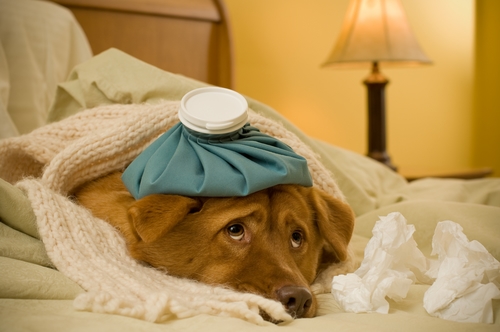
What To Do If Your Dog Gets The Flu

The canine influenza virus (CIV) is a relatively new virus and is part of the canine infectious respiratory disease complex, also known as ‘kennel cough.’
Although the H3N8 label might make you think of the human H1N1 swine flu virus, there’s no relationship between the two.
H3N8 was initially an influenza virus occurring in horses. The equine virus mutated and can now be transmitted among dogs as well.
The canine influenza virus is unrelated to any known human virus, and it is not a zoonotic disease, meaning your dog can’t pass it on to human family members.

Canine Influenza Transmission and Symptoms

According to Dr. Cynda Crawford, clinical assistant professor in the Maddie’s Shelter Medicine Program at the University of Florida College of Veterinary Medicine in Gainesville, and one of two people who discovered the existence of H3N8:

Virtually all dogs exposed to the canine influenza virus become infected; about 80 percent develop a flu-like illness, while another 20 percent do not become ill. Fortunately, most dogs recover within two weeks without any further health complications. However, some dogs progress to pneumonia, which is usually due to secondary bacterial infections. 

H3N8 CIV is highly contagious and is associated with overcrowded conditions like those found in some shelters, kennels and dog racing facilities.
Stressful environments are also closely linked to outbreaks of CIV.
The infection can also be spread from one dog to another by human hands, clothing, bowls, toys, tools – any method of transmission that can pick up the virus from one dog and deliver it to another.
Symptoms include an acute onset of coughing, sneezing, nasal discharge, fever and lethargy. Symptoms typically last a week or two.
Infected dogs will shed the virus for about seven days, with peak shedding during the first two to four days of infection but before onset of symptoms. This makes it difficult to isolate your dog during the time when the infection is most likely to be transmitted to other dogs. But as soon as acute symptoms appear, you should keep your pet away from other dogs to reduce the risk of spreading the infection.
Also use proper sanitation (wash hands, disinfect tools and surfaces) after handling a sick dog to reduce the risk of transmitting the virus between dogs.


CIV Vaccines

Just say no!
Too many vaccines, in particular non-core vaccines like those for CIV, can wreak havoc on your dog’s immune system, actually compromising its ability to protect your pet from pathogens like the H3N8 virus.
Unfortunately, many vets jump on the ‘latest and greatest vaccine’ bandwagon, making every recently created vaccine a part of their required protocol.
The only vaccine required by law is the rabies vaccine. If a particular veterinary clinic tells you any other vaccine is ‘required,’ they are citing their own business policy – not state law. If any pet-related enterprise (vet practice, groomer, boarding kennel, etc.) has vaccine requirements you don’t agree with, you’re under no obligation to do business with them. You’re free to take your pet elsewhere, which is certainly what I would do rather than submit my dog or cat to unnecessary, potentially toxic vaccines.
Also, an H3N8 vaccine doesn’t protect your dog against infection – it only reduces viral shedding and may lessen the severity and duration of symptoms.
It is unlikely most family dogs will be in a situation to contract CIV, but even if your pet does acquire the virus, chances are she’ll recover quite nicely without medical intervention, thanks to a healthy immune system.
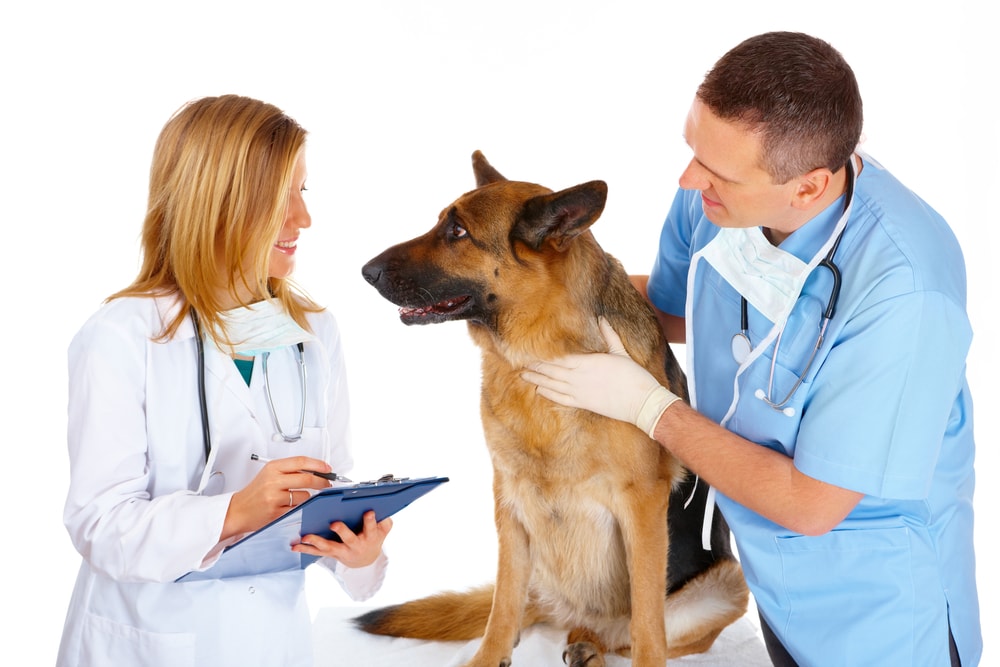
If your dog’s symptoms seem to be getting worse, make an appointment with your vet for an exam. Because influenza symptoms are similar to those of other viral and bacterial pathogens common in canine infectious respiratory disease complex, in order to make a definitive diagnosis your vet will need to test for either viral shedding or the existence of serum antibodies.

Natural Remedies for CIV

The best remedy for canine influenza is, of course, prevention.

If your dog is exposed to the influenza virus, I recommend you ask your holistic vet about homeopathic nosodes and remedies for symptom relief.
Also inquire about natural immune boosters like turmeric, oregano and fresh garlic, as well as useful herbs and essential oils to support the immune system.